The Ring and Ringu film comparison

The ring and ringu

For this film set review, I had several ideas about which direction I wanted to focus on for the two horror films. Ultimately, what stood out to me the most about was how the original character Sadako in Ringu compared to Samara in The Ring. I noticed distinct differences between the two in physical characteristics, how she kills her victims, and her past. I feel a bit of déjà vu writing this paper because I think The Ring falls into the same trap of Godzilla 1998 by favoring fancy special effects over focusing on how Sadako defines horror.

Take the final death scene for example. While both scenes feature the death of a character, I think the one in Ringu is scarier because the viewer only sees Sadako’s engorged eye before she kills Ryuji. By not seeing her face, I’m left wondering what she’s hiding behind her hair? Does she even have a face? The scene is chilling to watch, and the slow buildup of Sadako walking awkwardly towards Ryuji increases the horrific tension.

The same sequence plays out in the American version, but the scare factor is lost completely due to an overreliance on special effects. Samara is identical to Sadako in physical appearance, but this time she’s computer generated and has a grainy look to her that is obviously a reference to the cursed videotape. The slow buildup of the scene from Ringu is gone replaced with Samara teleporting and moving much quicker then Sadako in an almost supernatural fashion. Noah dies the same way as Ryujii, but this time we see Samara’s face completely, and she looks like an angry troll. In my opinion, seeing the face of Samara makes her less freighting because the mystery behind what she is hiding behind her hair is gone.

Another thing that stood out to me about Sadako and Samera is their backstory. While watching Ringu, I didn’t learn much about Sadako other than how she died and Ryuii seeing visions of her through ESP. Since I knew very little about Sadako, I found her more interesting and felt more connected to her. I think Ringu did a good job of not explaining everything about Sadako to me and encouraged me to learn more about her online.

The Ring, on the other hand, told me too much about Samara making her less terrifying to me than Sadako. The added plot lines like Rachel’s son Aidan being able to talk to Samara and seeing her talking with doctors felt unnecessary to me. Hearing Samara talk was the worst offender to me because it made me think that she was just a lonely child who missed her Mommy too much. By humanizing Samara too much, Hollywood lost sight of what made Sadako so fear producing to viewers.

 
Just like the Godzilla transition to America, I feel that Hollywood dropped the ball on what made characters like Sadako resonate with their Japanese audience. Much of what made Ringu great like the chilling atmosphere, slow build-up to horror, and frightening visuals became lost in the American version. Instead, Hollywood made everything bigger with flashy special effects and more action for fear of losing box office revenue.

Posted in UW- Milwaukee School Projects | Leave a comment

Gojira and Godzilla film comparison

Godzilla

So what makes Godzilla, Godzilla? Watching Gojira and the American remake gave me the impression that Godzilla was a giant unstoppable monster unaffected by modern military weapons that caused fear in the eyes of everyone. However, watching the monster from Godzilla 1998 tear up New York gave me a different impression of Godzilla, that did not feel anything like Godzilla. Here’s what worked for me about the first film and what didn’t.

For the most part, I thought the story of Gojira was pretty good, and I liked the characters. Although, this movie looks dated now it’s still impressive what Toho was able to do in a world with no computer-generated special effects. Compared to previous monster movies like King Kong and others Gojira was a huge leap forward. For me, one of the things that stood out in the film the most was the music. I thought the title theme was very catchy and found it clever that the music would build up dramatically when Godzilla appeared onscreen to build tension.

Speaking of tension, the action scenes in the film demonstrate how menacing Godzilla is even if they do look like someone is playing with model toys on a miniature set. Scenes like Godzilla tearing up the radio station, eating trains and missiles zooming right past him show just how powerless Japan is. Lastly, it makes perfect sense that Godzilla would have to be destroyed by the oxygen destroyer rather than modern military weapons.

I had no qualms with the American remake of Gojira in regards to what makes Godzilla, Godzilla. It helped that the story was practically identical, and some of the footage was the same. Unfortunately, the American remake of Gojira was quite a step down from the original and did not leave a memorable impression on me. The dubbing, dialogue, and narration for most of the film were pretty embarrassing and painful to watch. Having Steve Martin played by Raymond Burr didn’t add anything to the film and seemed unnecessary.

When it was time to watch Godzilla 1998 everything I thought I knew about Godzilla was thrown out by the wayside. There are many problems with this film. Like why is Godzilla an iguana? Why did he travel all the way to NY to build a nest when he could have just stayed in Japan or some foreign Island? How does NY stay afloat when he’s bigger than the underground tunnels he supposedly uses as his home? The movie was more about two characters trying to live up to their full potential and discover who they are instead of focusing primarily on Godzilla.

This version of Godzilla doesn’t demonstrate what makes Godzilla, Godzilla because he isn’t the main threat in the movie. The main threat is the fact that Godzilla has laid eggs in Madison Square Garden and once they all hatch the babies will reproduce just like Godzilla resulting in a new species overtaking humans. Most shameful of all is that Godzilla’s death comes from military force instead of some other means. The original Godzilla could never be destroyed by military force alone.

In conclusion, the Hollywoodization of Godzilla proves that American filmmakers are more concerned about spending money on impressive special effects that will lead to more box office revenue than staying true to the original vision and telling a compelling story.

Posted in UW- Milwaukee School Projects | Leave a comment

The Future of Journalism

Future of journalism

In the year 2025 newspapers and magazines have become obsolete. The digital revolution has begun. The people of the future have each been issued a holograph system that allows them to access the news in the palm of their hands. The technology incorporates all five of your senses.

For example, if you’re hungry you can use your voice to say Ian’s Pizza. A 3D image will pop up with information on locations, phone numbers, and anything else your imagination can conjure up. If you want to smell, feel, and taste a sample of the pizza before ordering you can do that too.

The holograph system is all touched based and incorporates the latest in 3D technology. Don’t like the person presenting the news? You have the option to change their identity, put them in a chicken suit, or do whatever you want to their appearance. How the news is presented is up to the user, and no holograph system is the same.

3D technology once a relatively new form of entertainment 15 years ago has reached its prime. Using your hands, you can touch images from print new stories, and customize them to suit your preference. For instance, you can zoom into photographs, and focus on small objects in the background like a water fountain.

With new stories presented in video formats, you have the option to put yourself in the story through a virtual reality system. This advanced VR system allows you to experience the news from the eyes of the reporter. This makes you feel like you were there as the news happened in a way no other form of media can duplicate.

Of course, there is a catch- 22 to this fancy high tech hologram system. You have to pay a monthly fee, and you are forced to watch a minimum of two hours of advertisements a day.

Posted in UW- Milwaukee School Projects | Leave a comment

Videogames Live Review

video games live

“I like to describe Videogames Lives as having all of the power and emotion of a symphony orchestra combined with the energy and excitement of a rock concert mixed together with all the cutting edge visuals, technology, interactivity and fun that videogames provide,” said Videogames Live composer Tommy Tallarico in a interview from the DVD release of Videogames Live.

Videogames Live kicked off on November 5th at the Pabst Theater in Milwaukee. The Milwaukee Symphony Orchestra played music from Super Mario Brothers, Halo, God of War, World of Warcraft, and other popular videogames. One neat aspect of the concert that stood out to me was the interactive elements of the show.

Prior to the event, a Guitar Hero competition took place in the lobby, and during the show, the winner got to come on stage and play the Aerosmith song “Sweet Emotion” alongside MSO and Tallarico. The winner was a young guy, and he had to score 250,000 points on expert to qualify for a prize package containing Videogames Live memorabilia.

Highlights for me were the dueling flute segment from Legend of Zelda that reminded me of the dueling banjo scene in Deliverance. The orchestral style performances for Halo, the rock and roll rhythms of Megaman, and a Super Mario Brothers flute piece covering all of the Italian plumber’s traditional platform games in chronological order.

Some of the other musical performances involved an opera singer for the God of War segment. A videogame series based loosely on Greek Mythology, and featuring epic set pieces. To coincide with Tron Evolution a music segment depicting the old arcade game appeared in the show’s lineup. Another piece involved nostalgic videogames such as Pong, Centipede, and Asteroids.

Unexpected surprises that I didn’t know would be in the show included a black and white video from 1968 showing the father of videogames Ralph Baer demonstrating how to play Pong for the first time. Baer even made a performance via Skype at the show. Another thing I didn’t know about was the videogame costume contest that happened before the show. A little kid dressed as a grunt from Halo won 1st prize.

Other neat quirks from the show that made me laugh happened between performances. Such as flash videos of videogame crossovers like Sonic vs. Pac-Man, Grand Theft Auto vs. Frogger, and Mortal Kombat vs. Donkey Kong. Two other highlights were a YouTube video of the top ten worst videogame voice acting performances, and a Frogger competition on stage.

What most impressed me about Videogames Lives is that the show is not targeted just to hardcore gamers, but to non-gamers as well. Many people are probably not familiar with the videogames shown here, but with the visual elements of the concert, I feel that non-gamers can gain a new appreciation for the videogame medium. As well as discover a whole new genre of music that they didn’t even know existed.

Overall I enjoyed Videogames Live, and my only complaint is that some of my favorite videogames series like Metal Gear Solid weren’t a part of this show’s lineup. I would definitely go again, and I recommend it to everyone. It was a concert experience unlike any other, and incredibly entertaining.

Posted in Blog posts | Leave a comment

Pokemon Black and White Preview

Pokemon

Watch out! Nintendo DS sales are going to explode this week. The fifth generation of Pokémon games has arrived. Pokémon is second only to Super Mario Brothers in the top-selling videogame franchises of all time. With well over 150 million Pokémon games sold worldwide to date, the series is bound to overtake Mario’s benchmark of 200 million-plus games sold sooner or later. The titles for the new games (Pokémon Black and Pokémon White) will be out by the time you read this.

This iteration of Pokémon is radically different from the others and features a lot of changes to the series. Whether you’ve grown tired of the franchise or have never played a Pokémon game before, there’s a lot to be excited
about.

What’s stayed the same: Just like every other Pokémon game, you take on the role of a Pokémon trainer (either as a boy or a girl) and choose between three types of starter Pokémon a fire, grass or water type. You still battle eight gym leaders and, as always, fight with your
rival every so often.

And once again, you have to put a stop to some hooligan mischief (the new gang is called Team Plasma). Touch-based interface controls from the DS games are back, too, as is the time-based system that keeps track of day and night cycles which dictate what types of Pokémon appear in random battles. And, of course, you will explore a new world while you capture and collect hundreds of Pokémon on your quest.

What’s new: Pokémon Black and White are more of an evolution than a revolution for the series, but there are some big changes this time around:

•156 new Pokémon with new abilities (which brings the grand total up to 649).

• New 3D-graphic engine: Towns and travel locations are no longer simple 2D sprites

• Animation for Pokémon: They no longer remain static in battle and fight in real-time

• Seasonal gameplay: Depending on what time of year you play, new areas will become open, and new Pokémon can be found

• Both versions aren’t identical this time: Some areas will be exclusive to each game, and places you go will be represented differently.

Changes to the battle system:

Three-on three battles and rotation-based battles are a first for the series. Triple-based battles will force you to strategize in regard to how you position your Pokémon in combat. If your Pokémon is too far away from your opponent, they won’t be able to attack, and if they’re too close, they will take more damage. Rotation-based battles, on the other hand, let you fight one on- one and let you switch out Pokémon on the fly.

Other minor tweaks to the battle system include oath moves that let you combine Pokémon types like water and electricity to create new attacks. Technical machine(or TM) items now are infinite based, so you can teach your Pokémon a wide range of abilities. Finally, a new ability used during a battle called “deru power” gives you access to special techniques like restoring your Pokémon’s health faster.

Multiplayer:  Online play has been streamlined considerably, and it’s easier than ever to connect wirelessly with your friends. Anew system called Global Link lets you battle Pokémon with people all over the world and keeps track of your battle stats. Global Trade lets you exchange Pokémon and items.

A new mode called Dream World lets you play with your Pokémon in mini-games on a web browser and even lets you catch rare Pokémon. Video
chat support for DSi and 3DS is confirmed, but Nintendo will make sure you keep it clean so the system doesn’t turn into Chatroulette. Last but not least is High Link mode, where you can play co-op missions with your friends.

Minor changes: Some alterations to the core gameplay include the first female professor and new areas like a theme park. Most surprising is that you won’t encounter any of the old Pokémon seen in previous versions until late in the game. Also, the games are much faster, and new dynamic camera angles make for a more cinematic experience.

This article originally appeared in the UWM Post. Check out the original article here. http://issuu.com/theuwmpost/docs/uwmpost_30711

Posted in UWM Post Newspaper Articles | Leave a comment

The Many Faces of a Multi-Talented Mario

mario-3890808_1920

This week’s hot new video game release is Mario Sports Mix for the Wii. The game compiles basketball, dodge ball volleyball, and hockey all onto one disc. Mario is traditionally associated with platformers, but he’s dabbled in other genres as well. Here is a sample of the dozens of Mario games released worldwide.

Mario the Athlete: Mario is quite the athlete, despite having a reputation for being a chubby, Italian plumber who eats too much pasta. Nintendo has released countless sports games featuring Mario, which include, golf, tennis, soccer, baseball and basketball. He even collaborated with Sonic the Hedgehog for the summer and winter Olympic Games. All of them are pretty good, but tennis is by far the most fun.

Mario Behind the Wheel: Who doesn’t love Mario Kart? There have been many iterations of Mario Kart, but the most criminally overlooked entry in the franchise is Mario Kart: Double Dash!! for the GameCube. This game mixes up the formula with two racers per kart, and multiplayer supports up to 16 players.

Mario’s Fiestas: Like Halo or Call of Duty, the Mario Party series is the perfect game for those nights when you just want to eat pizza and drink beer all night with a group of friends. Mario Party is like a virtual board game, but with dozens of mini-games designed for one to four players.

Sparring Mario: Super Smash Brothers is probably familiar to most of you, but if you need a refresher the basic premise is classic Nintendo characters like Mario, Donkey Kong and Link gather into the fighting ring, and kick the crap out of each other.

Mario RPG: Mario’s first appearance in a role-playing game (RPG) was Super Mario RPG Legend of the Seven Stars, a dream collaboration between Nintendo and Square (the makers of Final Fantasy). Although the game was great for its time, the Paper Mario games that came out afterward are significantly better. Two things these games do better than most RPG’s out there are well- written stories with hilarious dialogue that are laugh out loud funny, and a timed button-press battle system that keeps combat from growing stale.

Miscellaneous Mario’s: Virtual Boy – Nintendo’s first stab at 3D gaming – wasn’t very memorable, but there were a few gems for the system. One was Mario Clash, a take of off the classic Mario’s Bros arcade game where you throw shells to eliminate your enemies. Another odd Mario game is MarioPaint for the Super Nintendo, which came packaged with a mouse. The game was noteworthy for its applications that allowed users to create their own artwork and music.

Puzzled Mario: Dr. Mario is a takeoff of Tetris where the goal is to line up vitamin capsules by the same color either horizontally or vertically to eliminate viruses. Mario’s other take at the puzzle genre is Mario’s Picross for the original Game Boy. To solve puzzles you needed to fill in numbers on select parts of a grid to form a picture.

Mario Arcade: The Mario vs. Donkey Kong games for Game Boy Advance and Nintendo DS are similar to the original Donkey Kong arcade game but larger in scope. The gameplay is a combination of platforming and puzzles. Mario also can be found in the Game and Watch Gallery games for Game Boy, a small collection of easy pick-up-and play games like rescuing people from a fire.

Mario and the Gang: Mario has appeared in minor roles in some of his friend’s games, from the mushroom kingdom as well as a few non- Nintendo games. Some highlights where Mario can be found are in Luigi’sMansion, a Ghostbusters style video game for GameCube. Wario Land: Super Mario Land 3 is a platform game starring Mario’s rival Wario.

As for cameos, Mario can be spotted in The Legend of Zelda: A Link to the Past for the Super Nintendo, and both of the Nintendo 64’s Zelda’s. And as far as non-Nintendo games are concerned, Mario has been a playable character in SSX Tour, NBA Street Vol. 3, And can be seen in Metal Gear Solid: The Twin Snakes, all for GameCube.

Cool free Mario flash games: Go to http://www.Funnygames. Co.Uk to play dozens of free Mario games. Highlights include Mario Combat, a game that plays like a platformer, but where Mario uses kung fu to defeat his enemies. The other standout title is Super Mario Crossover, where you can play through the original Super Mario Brothers as Megaman, Samus Aran from Metroid, the guy from Contra, and other characters from the NES era.

Mario games that suck: Avoid the educational Mario games like Mario is Missing, Mario Time Machine, and others like Mario’s Early Years: Fun with Numbers at all costs. They’re complete crap and don’t live up to the Mario name.

What’s next for Mario in 2011: A new Mario game has been confirmed for the Nintendo 3DS and is rumored to be a new take on Super Mario World. New versions of Paper Mario and Mario Kart have been confirmed for 3DS as well.

This article originally appeared in the UWM Post. Check out the original article here. http://issuu.com/theuwmpost/docs/2-7-2011

Posted in UWM Post Newspaper Articles | Leave a comment

3DS vs Sony NGP

IMG_0912

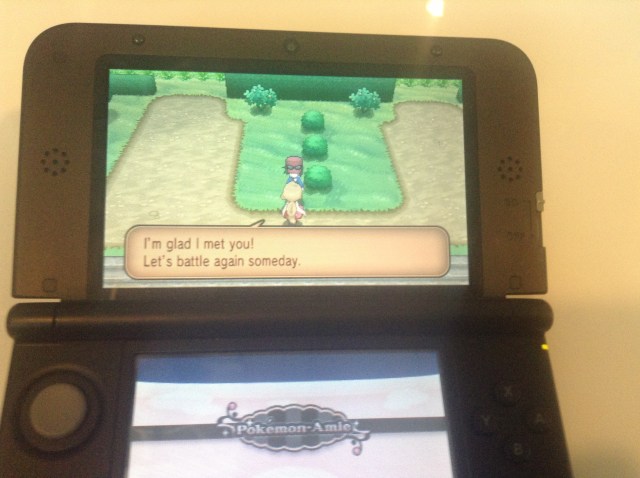
Round two of the portable videogame war between Sony and Nintendo is quickly approaching. Nintendo, the current champ of portable gaming, is releasing the 3DS their successor to the Nintendo DS on March 27th. While Sony recently just announced the Next Generation Portable (NGP) the code name for their follow-up to the PSP. Both systems offer compelling new gameplay experiences, and are vastly different from each other. However, only one handheld can come out on top. Which one will reign supreme the 3DS or the NGP? Here’s a side by side comparison to help you decide which system is right for you.

Nintendo 3DS: Why it’s a must-have portable device.

The Nintendo 3DS is the first portable gaming device to offer 3D gaming without the need for dorky 3D glasses. The system is powerful with most games displaying graphics at levels between Wii, and PS3/360 quality. The design is very similar to the DS, but the handheld is packed with new features like analog control, motion/gyro support, the ability to watch 3D movies, and even a 3D camera. Some of the other new features include a virtual console shop similar to the Wii’s where you can buy old Game Boy games in addition to new software, and a service called Game Coins that  rewards users who carry their 3DS with them as they travel during the day.

Another plus for the 3DS is that support from third party developers is the strongest Nintendo has ever had. Key franchises like Metal Gear Solid, Resident Evil, and Assassin’s Creed will all be available for the system. As well as Nintendo’s own strong first party lineup that includes Mario, Zelda, and others. Packaged with each 3DS will be six augmented- reality(AR) cards called  that show of the 3DS tech in creative ways, and best of all the 3DS is fully compatible with the DS’s massive library of games.

What not to like

The system is pricey. $250 is a lot for a handheld even if the technology is revolutionary. Games will be expensive and most likely range from $40- $60. Also, the launch lineup is pretty weak with no killer apps that scream “buy me!” Super Street Fighter IV and Resident Evil Mercenaries are graphically impressive, but their hardly system sellers. It’s also disappointing that there’s no support for Game Boy Advance games on the 3DS’s virtual console.

One big concern may be long-term effects of playing in 3D. Will it cause eye damage? It has yet to be proven, but luckily the 3DS has a slider that allows you to turn off the 3D if it bothers you. Other things to keep in mind are a short battery life, (between three- eight hours), and the fact that Nintendo will likely release cooler colors as well as revisions to the hardware in a year similar to Apple.

Sony’s NGP: Why it’s a must-have portable device.

First off the screen is absolutely gorgeous! It’s twice the resolution of the PSP, and the graphics pack a powerful punch. The NGP version of Uncharted comes close to rivaling its PS3 counterpart in terms of graphics. Even better, Sony has fixed the biggest criticisms of the PSP, the lack of a second analog stick, and the clunky UMD format. UMD’s have been dropped in favor of flash-based memory cards that should help reduce load times.

The NGP incorporates new technology that the PSP didn’t have such as touch controls and cameras for the front and back of the unit. Support for 3G, Wi-Fi, GPS, and motion controls are also included. In addition to the new features, a new interface called LiveArea houses all your games, applications, and trophies. Software support is strong with big franchises like Uncharted, Call of Duty, LittleBigPlanet, and many more on the way.

NGP: What’s not to like.

All this breakthrough technology comes at a price. No price has been set for the NGP but expects it to be around $250- $400. Like the 3DS, games are going to be expensive and will probably cost almost as much as console games. With development costs so high game developers are more likely to rely on franchises, and avoid taking risks with new intellectual properties. It is true for the 3DS but is an even bigger concern for the NGP.

Not yet confirmed, but hopefully Sony will do away with the endless firmware upgrades that take forever to download and find a way to extend the battery life. Battery life will be about the same as the PSP making it shorter than the 3DS. Lastly, the size of the unit is pretty big, and won’t fit in your pocket easily. Hopefully, Sony will consider revising it before the launch of the system sometime in winter 2011 or early 2012.

Final thoughts

It’s too early to pick a winner, but it’s definitely going to be a portable war unlike any other. Sony and Nintendo may be at war with each other, but their biggest competitor actually could be Apple. The iPad and iPhone both offer a different approach to portable gaming then the 3DS and NGP.  The key advantages Apple has over Sony and Nintendo is the convenience factor of always having these devices with you, the prices of games that range from 99 cents to $20, and not having to devote so much time to playing games. It’s something to consider before committing to a purchase of a new handheld gaming device.

This article originally appeared in the UWM POST. Check out the original article here. http://issuu.com/theuwmpost/docs/post1312011

Posted in UWM Post Newspaper Articles | Leave a comment

11 original videogames to watch for in 2011

wii videogames

Now that the holidays are over it’s time to prepare for the onslaught of new videogames coming out in 2011. Most are sequels to popular franchises like Gears of War, Uncharted, and the Legend of Zelda, but some are completely original. Here are 11 new games that aren’t sequels to keep your eyes on when you’re looking for something unique.

Ghost Trick: Phantom Detective– Nintendo DS

Out now as you read this, Ghost Trick: Phantom Detective is a text-based adventure game from the creators of the Phoenix Wright Ace Attorney series. What makes this game interesting is that the main protagonist of the story is dead. Only by solving puzzles and discovering clues will you unravel the mystery of who murdered you.

Child of Eden– PS3, 360

Child of Eden is the spiritual successor to Rez a rhythm action game where you create beats of music as you blast enemies to smithereens. The game is also playable on Microsoft’s Kinect and is one of the best examples of controller-free gameplay.

Journey– PS3

In Journey, you take on the role of a lost traveler in a sprawling desert meticulously designed to make you feel small and almost powerless to everything around you. Although, the game features a multiplayer component you won’t be able to talk with people you meet online. Instead, you will have to communicate your actions through gameplay.

Bulletstorm– PC, 360, PS3

First-person shooters are everywhere these days. So it’s refreshing to see a FPS that offers something different from its peers. Bulletstorm, developed by Epic Games the creators of Gears of War incorporates a skillshot gameplay system that rewards players for destroying enemies in the most creative way possible.

The Last Story– Nintendo Wii

The Last Story is a Japanese roleplaying game featuring real-time combat and online multiplayer support for up to six players. The game is designed by Final Fantasy creator Hironobu Sakaguchi, and music is scored by series composer Nobuo Uematsu.

L.A. Noire– PS3, 360

This ambitious new game from Rockstar creators of Grand Theft Auto and Red Dead Redemption is an open-world detective thriller. Taking place in L.A. in the 1940’s, L.A. Noire features realistic graphics, an enormous script over 22,000 pages long, and a revolutionary new interrogation system.

Rage– PC, 360, PS3

Besides the cutting edge graphics, Rage is more than just your average fps. It features an open world design reminiscent of Grand Theft Auto with plenty of side quests to do along with the main campaign, and car combat similar to Twisted Metal.

Project Draco– 360

Like Child of Eden, Project Draco offers a controller-free gaming experience. The emphasis of the game is on flight and exploration. Little else is known, but the game may incorporate aerial combat similar to the Sega Saturn cult classic Panzer Dragoon.

The Last Guardian– PS3

The Last Guardian explores the relationship between a young boy and a gigantic griffin as they work together to escape from an enormous castle. Gameplay looks like it will be a mix between the platform and puzzles segments of Ico, and the massive scale of Shadow of the Colossus.

Shadow of the Dammed– PS3, 360

Shadow of the Dammed is what you get when you combined the over the top gun play of Resident Evil 4 with the stylish art design, and humor of No More Heroes. The game puts you in the role of Garcia Hotspur who undertakes a journey to hell to find his lost long love.

El Shaddai: Ascension of the Metatron– PS3, 360

This game is all about the art style. El Shaddai: Ascension of the Metatron is a third-person action game that looks like a water brush painting come to life. Don’t let this game pass you by if you’re a fan of Okami and Devil May Cry.

This article originally appeared in the UWM Post.

Posted in UWM Post Newspaper Articles | Leave a comment

Thor Videogame preview

Thor picture

The God of Thunder finally makes his way to the silver screen this Friday, and not surprisingly, a video game will be released alongside the new movie. What’s surprising is that three different versions come out May 2nd, and each title offers something different. Take a look below to find out which title lives up to the Thor name.

Thor for Xbox 360 and PlayStation 3 First the bad news: This game is developed by Sega, who  handled last summer’s mediocre IronMan 2 videogame adaption. The good news is that Thor is still cut above most movie shovelware titles. The story for the game is completely original and separate from the films.

Matt Fraction from Marvel Comics wrote the script that takes Thor to several worlds from the comic books that aren’t shown in the film. Gameplay is similar to most third person action games with an emphasis on melee combo attacks and magic. If you’ve played God of War, you’ll feel right at home here. Boss battles, on the other hand, will be massive in scale and play out like scenes in the PlayStation 2 classic Shadow of the Colossus.

The verdict Based on early previews of the game from several video game websites, this game looks like it would make a solid rental, but lacks substance. It seems to be the type of game you can blast through in a weekend and then quickly forget about afterward. The graphics are nice and having the movie’s cast doing voice work is a plus, but the core gameplay doesn’t really offer anything new that hasn’t been seen in other third-person action games before.

Thor for Wii This game is similar to the first Thor game, but the graphics are closer to the comic books than they are to the film. Thor for Wii is also action-oriented, and players can literally make combos last 200 hits or more. Also, like most other Wii titles, motion controls substitute for pressing buttons on the controller to perform advanced maneuvers. This game’s main selling point is that it includes exclusive flight levels that play out like a light gun game where you shoot everything on screen as the game moves on its own.

The verdict At $10 cheaper than the Xbox version, this one has a slight advantage over its older brother. The exclusive flight levels are a nice gesture, but this game lacks the graphical finesse of the HD versions. This title will likely be in the Wii bargain bin a few months after the movie’s release, so you may want to just wait or rent it.

Thor for DS Playing to the DS’s strength, this game is a 2D side-scrolling brawler with a vibrant art style that makes effective use of both screens. For example, boss battles will utilize both screens allowing Thor to attack his enemies from above and below. The game encourages speedy play and resembles the arcade action of Contra 4. Lastly, the developers wisely stuck to a simple control scheme that doesn’t involve using the stylus for touch control.

The verdict Out of the three, this one has the most going for it. The developer Wayward has a proven track record of creating solid DS games like Shantae: Risky Revenge, Contra 4, and Batman: The Brave and the Bold. If you liked those games, you probably won’t regret your purchase.

This article originally appeared in the UWM Post. Check out the original article here. http://issuu.com/theuwmpost/docs/uwmpost_50211

Posted in UWM Post Newspaper Articles | Leave a comment

What’s College For Anyway?

college wordpress photo

It’s a Saturday afternoon in Milwaukee and parents gather around the room at Danceworks, Inc., eager to watch their children perform. They’re doing hip-hop routines they learned from their dance instructor, TraVon Haase, a business student at the University of Wisconsin-Milwaukee.

“They’re the shining stars,” Haase said. “So I want to help them and groom them to be what my generation is. That’s the most important thing you can do because we always need to advance as a society.”

Haase would like to open his own dance studio, which he imagines will be bigger and teach a variety of dance genres. However, like many students at UWM, his greatest challenge will be finding a job in a lousy economy.

Universities like UWM tend to provide students with a liberal arts background and some job training skills. For many students, however, having work experience is just as important as getting a liberal arts education in helping them succeed. It’s an ongoing debate at UWM and universities around the country: should colleges emphasize job training or a liberal arts education?

Michael Liston, Associate Dean of Arts and Humanities for the UWM Graduate School, said that focusing solely on job training at a university is a problem.

“If you train students for a certain job, the way the economy’s been going there’s no guarantee that what they learn from the training might be relevant in five years,” Liston said. “The job might be gone.”

Liston said it’s more important for students to learn how to be lifelong thinkers so they can adapt to the changing job market and digital landscape.

BENEFITS OF LIBERAL ARTS

“The liberal base gives you the ability to be flexible later on if your career becomes too narrow,” said Liam Callanan, the chair of the English Department at UWM.

He explained that a liberal arts education is like working out at the gym, where you’re training yourself to be strong, but in versatile ways. Knowing a variety of topics is important, because most employers aren’t looking for someone who’s only trained in one thing, Callanan said.

Rebekah Smiltneek, an English major at UWM, said that the liberal arts skills that she learned in college were valuable to her because they taught her how to analyze books for her internship at Curt G. Joa Company. She said that liberal arts courses help students who are undecided about what to do after college.

Still, Smiltneek said that having an internship was just as important as her time in school, and that just having a liberal arts background won’t get students jobs.

“The things you memorize aren’t going to apply to your job, but the actual program and internships are,” Smiltneek said. “With internships I’ve learned just as much, if not more than I did in the technical writing program.”

WHAT EMPLOYERS ARE LOOKING FOR

Wade Krogwold, Campus and Community Manager for the eldercare company Direct Supply, said there are skills reinforced in the classes students take that provide a strong foundation for students to learn to lead and develop, and that sometimes it’s not possible to have the work experience before getting a job.

Krogwold said that most students get caught up in simply balancing their schoolwork with part-time jobs and a social life without giving much thought about how to make themselves more marketable to employers.

“Sometimes it’s about sacrificing short-term jobs for internships, an unpaid role, or volunteering to get competitive advantages, and not just about being qualified,” Krogwold said.

Many students don’t realize the value of volunteer work and being part of a student organization. Involvement with either one can give students valuable leadership skills and work experience that could help them with getting a job.

Eric Anger, Director at the Center for Student Involvement at UWM, pointed to the Japanese Anime Association (JAA), which is one of the largest organizations on campus. Anger said that one of the things JAA does is hold an anime convention every year at the Hyatt Regency Milwaukee Hotel.

In order to hold these anime conventions, JAA organization members use business skills related to marketing, recruiting people, and running their own business, he said.

“Those are some very important skill sets that folks at the Japanese Association are getting,” Anger said. “That probably wasn’t their intent or their goal, but they’re picking them all up.”

Laurie Marks, Director of the Center for Volunteerism at UWM, said there’s no perfect organization for students to be involved in.

“What’s important is that they get involved in something where they build relationships while they do it, and how they can articulate that experience into qualities and skills that employers are looking for,” Marks said.

For example, Brittany Peckels, marketing major at UWM, said that her role as vice president of the soccer club at UWM was a valuable experience for her.

“I have a lot of administration work to do,” Peckels said. “Like scheduling games, keeping everyone in line, doing finances and grants. It helps me with the business aspect because I’ll eventually be doing things like that.”

LIBERAL ARTS AND JOB TRAINING EQUALLY IMPORTANT

Ultimately, when it comes down to what college should really be used for, Tom Bachuber, Director for the UWM Career Development Center, said that job training needs to be supplemented with liberal arts because society needs both.

According to Bachuber, a good example of a job that requires both liberal arts knowledge and job training skills is that of a technologist. Bachuber said that technologists need job training skills to fix things, but it helps if they have a bit of liberal arts education, too. The liberal arts education helps them interact with people better, solve problems, communicate ideas, and in other useful ways, Bachuber said.

“A university like UWM tries to be all things to all people, but when resources and money are limited, that can be difficult,” Bachuber said. “Therein lies the challenge for not only places like UWM, but all universities.”

Bachuber said that liberal arts colleges like Carroll have fewer requirements for majors, so their students can take a broader variety of courses. However, they wouldn’t have as much job training as students at UWM would.

CAREER ADVICE 

Get more involved with social media sites, especially LinkedIn.  It’s the Facebook for job seekers.

  • Have a digital portfolio to show employers.
  • Think of creative ways to market yourself, instead of spending too much time on your resume or applying for jobs.
  • If you want to work in a certain geographic area, you need to live nearby to get contact info and references.
  • Avoid asking employers whether they’re hiring. It’s the kiss of death. Instead, ask questions that show interest in them and they will take an interest in you.

For students worried about getting a job based on their major, Bachuber said he wouldn’t persuade anyone to change their major for fear of not being marketable.

“If you’re really passionate about something, do everything you can to make yourself more marketable,” Bachuber said. “Get experience, take other classes, minor, double major, and have a backup plan.”

UWM will always have a place for humanities. The only reason a certain major might be thrown out is because of low student enrollment or faculty size, Bachuber said.

Michael Newman, Assistant Professor of Journalism, Advertising, and Media Studies at UWM, said that it’s important for students to understand that the major they choose as an undergraduate doesn’t dictate their fate in the job market.

“There are people who work as journalists who are political science majors,” Newman said. “I think that sometimes a sense of college as a time of learning for its own sake is lost because of the very practical considerations people have in mind.”

GRAD SCHOOL

Many students go to graduate school after they finish their undergraduate degree, like Melody Firkus, a UWM student studying Women’s Studies and English.

“The economy is bad,” Firkus said. “So I’m going to go to school until it improves.”

However, Rachael Jurek, who manages internships in UW-Milwaukee’s Department of Journalism, Advertising, and Media Studies, said that there are a few risks of going to grad school that student’s might not be aware of.

“I went to grad school and it was good for me because I love to teach, but it can turn you into someone who’s over-educated and under-qualified,” she said.

Jurek said that employers won’t pay someone a master’s salary if they don’t have enough experience to know what they’re doing.

Kathryn Kinter, Career Counselor at the Career Development Center, said to avoid making this mistake, and that grad students need to make sure that they gain real-world experience while taking classes.

LIFE AFTER COLLEGE

For many students, the ultimate test won’t be a horrendous final exam. It will be finding a job after graduation.

Rebekah Smiltneek, who majored in English at UWM, was fortunate to be offered a job at Curt G. Joa Company, where she interned last summer.

“The two biggest things for me were having an internship and being proactive,” Smiltneek said. “It doesn’t matter how smart or how great you are. Someone has to offer you the opportunity.”

TraVon Haase, the business major who wants to open his own dance studio, isn’t relying on luck.

Haase said that perseverance, taking the initiative, and knowing that self-fulfillment is coming keeps him optimistic about the future.

“I’m worried,” Haase said. “But the most important thing is that you have to think uniquely to put yourself ahead of everybody else.”


Posted in UW- Milwaukee School Projects | Leave a comment